Ad Serving Technology: What It Is and How It Powers Digital Advertising
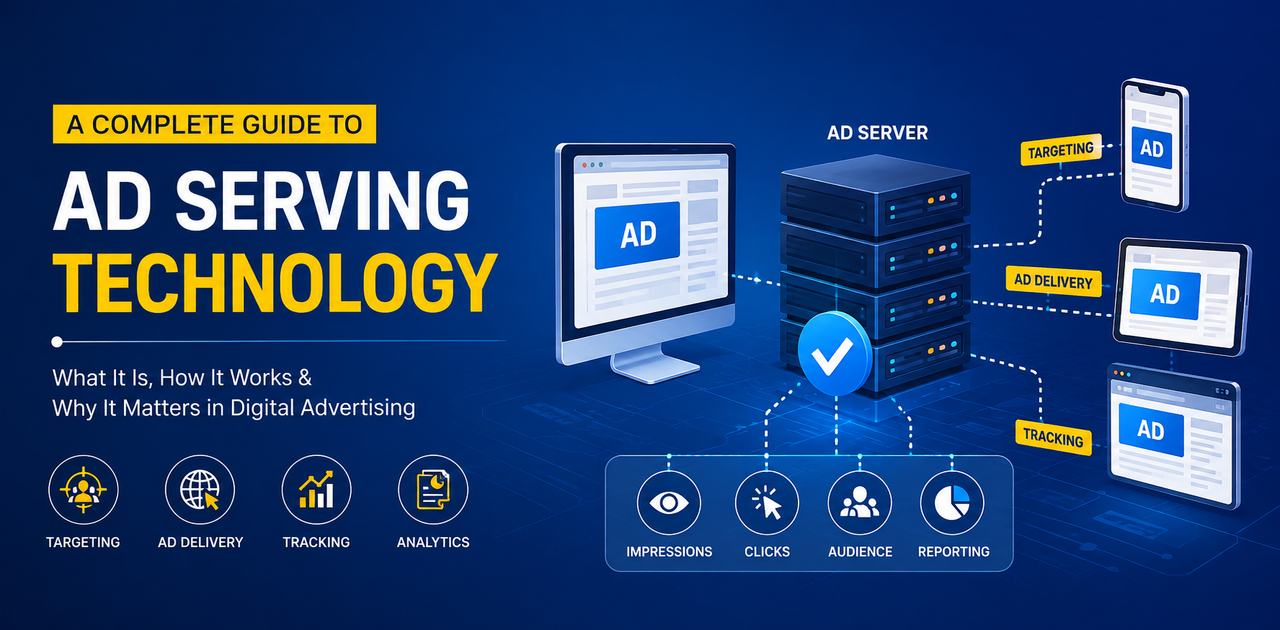
Every ad you see online, whether it’s a banner on a news site or a video before a YouTube clip, was chosen and delivered by a system working behind the scenes in a fraction of a second. That system is ad serving technology, and it’s one of the least visible but most essential pieces of digital advertising infrastructure.
As advertising has moved from a handful of publishers to a sprawling mix of websites, apps, video platforms and social channels, the job of deciding which ad to show, to whom, and when has become far more complex. Ad serving technology is what makes that decision-making possible at scale, in real time, and with enough accuracy to keep both advertisers and publishers accountable for results.
This guide walks through what ad serving technology actually does, how the process works step by step, why it matters for advertisers and publishers, and how it connects to related tools like third-party ad servers. Along the way, we’ll cover the features worth looking for, common challenges teams run into, and how to think about choosing a solution.
What Is Ad Serving Technology?
Ad serving technology is the software that stores, selects, delivers and tracks digital ads across websites, apps and other digital channels. In simple terms, it’s the engine that decides which ad shows up in a given ad space, sends it to the user’s screen, and records what happened afterward.
In practical terms, an ad server sits between the advertiser’s creative assets and the publisher’s ad space. When a webpage or app loads, it sends a request to the ad server asking for an ad to fill a specific slot. The server evaluates the available campaigns, applies targeting rules, and returns the ad that best matches the criteria, all within milliseconds.
Three parties are involved in this relationship, plus the ad server itself:
- Advertisers, who create campaigns and want their ads shown to the right audience
- Publishers, who own the websites or apps where ad space is available
- Users, whose behavior and context help determine which ad is relevant
- The ad server, which coordinates the exchange and keeps a record of what was delivered
Without this coordination layer, advertisers would have no reliable way to manage campaigns across multiple publishers, and publishers would have no efficient way to fill their ad space with relevant, paying ads.
How Does Ad Serving Technology Work?
The ad serving process happens quickly, but it involves several distinct steps. Here’s what typically occurs from the moment a page loads to when a report shows up in a dashboard.
- Ad request: A user visits a webpage or opens an app, and the page’s code sends a request to the ad server for an ad to fill an available slot.
- User and context information: The request carries contextual signals, such as the page content, device type, location or, where permitted, first-party data about the user.
- Ad selection: The ad server checks which active campaigns are eligible to fill that slot based on budget, targeting rules and priority.
- Targeting and decision-making: The server applies logic such as audience targeting, frequency capping and bidding rules to pick the single best-matching ad.
- Ad delivery: The chosen ad creative is delivered to the user’s browser or app, typically in well under a second.
- Impression and click tracking: The ad server logs that the ad was shown (an impression) and records any clicks or other interactions.
- Reporting and optimization: This data feeds into dashboards that advertisers and publishers use to evaluate performance and adjust campaigns going forward.
This cycle repeats every time an ad slot loads, which is why ad serving technology needs to be fast, reliable and able to handle enormous volume without slowing down the page for the user.
Why Is Ad Serving Technology Important?
Ad serving technology matters because it turns digital advertising from a manual, guesswork-driven process into something measurable and manageable. A few areas where its impact is most direct:
- Campaign management: Centralizes creative, budgets and targeting rules in one place instead of managing them separately per publisher
- Targeting: Applies audience, contextual or geographic criteria so ads reach people more likely to be interested
- Faster ad delivery: Selects and serves ads in milliseconds, which keeps pages loading quickly for users
- Measurement: Tracks impressions, clicks and conversions so performance isn’t a guess
- Optimization: Provides the data needed to adjust targeting, creative or budget allocation mid-campaign
- Publisher monetization: Helps publishers fill ad space efficiently and compare demand from different advertisers
- Advertiser performance: Gives advertisers visibility into how each campaign, placement or creative is actually performing
In short, ad serving technology is what makes accountability possible in digital advertising. Without it, neither side of the transaction would have reliable data to work from.
What Is a Third-Party Ad Server?
A third-party ad server is an ad-serving platform operated independently of any single publisher or advertising network. Instead of relying on the tracking and reporting built into one publisher’s system, advertisers use a third-party ad server to manage and measure campaigns consistently across multiple publishers, platforms and networks at once.
This matters because advertisers rarely run a campaign on just one site. A single campaign might appear across several publisher sites, a programmatic exchange, and a social platform, each with its own reporting quirks. A third-party ad server acts as an independent source of truth, applying the same tracking logic everywhere so the numbers can actually be compared.
It also gives advertisers more control over creative management, frequency capping and targeting across that entire mix, rather than configuring each publisher’s system separately.
Ad Server vs Third-Party Ad Server
The terms sound similar, and the underlying technology overlaps, but the two typically serve different purposes depending on who’s using them and why.
| Aspect | Ad Server | Third-Party Ad Server |
| Who typically uses it | A single publisher or advertiser managing their own inventory or campaigns | Advertisers and agencies running campaigns across multiple publishers or platforms |
| Primary role | Serves and manages ads within one environment | Serves ads and provides independent tracking across many environments |
| Reporting scope | Limited to that one platform’s data | Consolidated view across publishers, networks and exchanges |
| Best suited for | Publishers monetizing their own site or app | Advertisers running multi-channel or multi-publisher campaigns |
In practice, many advertisers use both: a publisher’s own ad server handles delivery on that specific site, while a third-party ad server layered on top provides consistent, independent measurement across the whole campaign.
Key Features of Modern Ad Serving Technology
Not all ad servers offer the same depth of functionality. These are the capabilities most relevant to running effective, measurable campaigns:
- Campaign management tools for organizing creative, budgets, flight dates and targeting rules
- Audience targeting based on demographics, interests, behavior or first-party data
- Frequency capping to limit how often the same user sees a given ad
- Creative management for uploading, rotating and testing different ad formats
- Impression tracking to record every time an ad is displayed
- Click tracking to measure user engagement with the ad
- Conversion measurement to connect ad exposure to a desired action, like a purchase or sign-up
- Reporting dashboards that summarize performance across campaigns and placements
- Analytics tools for deeper analysis of trends and audience behavior
- Optimization features that help reallocate budget toward better-performing placements
- Integration capabilities with demand-side platforms, data providers and analytics tools
Benefits of Using Modern Ad Serving Technology
For Advertisers
- Clearer visibility into which campaigns, creatives and placements are actually working
- More precise targeting, reducing wasted spend on uninterested audiences
- Centralized control over creative and budget across multiple publishers
- Independent, consistent measurement instead of relying solely on publisher-reported numbers
For Publishers
- More efficient use of available ad inventory
- Better ability to compare demand from different advertisers or networks
- Reliable delivery that doesn’t slow down page load times
- Data to support pricing and packaging of ad space
Common Challenges in Ad Serving
Ad serving technology solves real problems, but it isn’t without friction. Teams working in digital advertising regularly run into a few recurring challenges:
- Fragmented advertising environments, with campaigns spread across many publishers, networks and formats
- Inaccurate or inconsistent tracking, especially when different platforms measure the same activity differently
- Privacy changes, including the phase-out of third-party cookies, that require new approaches to targeting and measurement
- Campaign complexity, as more targeting options and formats make setup and management more time-consuming
- Reporting discrepancies between what different platforms show for the same campaign
- Latency, where slow ad delivery can affect page performance and user experience
- Multiple platform integrations, which can create technical overhead when systems don’t connect cleanly
None of these challenges are unique to any one vendor. They’re structural realities of an advertising ecosystem that has grown more distributed and more privacy-conscious over time.
How to Choose the Right Ad Serving Solution
There’s no single “best” ad server for every business. The right choice depends on the scale of campaigns, the complexity of targeting needs, and how the platform needs to fit into an existing tech stack. A few criteria worth weighing:
- Scalability: Can it handle current campaign volume and grow with future needs?
- Targeting capabilities: Does it support the audience, contextual or first-party targeting your campaigns require?
- Reporting: Is the data detailed enough to actually inform decisions, not just summarize activity?
- Integrations: Does it connect cleanly with the DSPs, analytics tools and data sources already in use?
- Ease of use: Can the team actually operate it efficiently without excessive training or workarounds?
- Campaign control: Does it offer the level of granularity needed over targeting, pacing and creative rotation?
- Measurement: Are impression, click and conversion tracking accurate and consistent?
- Support: Is there responsive support available when something breaks mid-campaign?
- Privacy and compliance: Does it align with current data regulations and evolving privacy standards?
The Role of Ad Serving Technology in Modern Digital Advertising
Ad serving technology has had to evolve alongside the rest of digital advertising. Programmatic advertising, where ad space is bought and sold through automated auctions, now depends heavily on ad servers to execute decisions in real time and record what happened for reporting.
At the same time, privacy changes are reshaping how targeting works. As third-party cookies become less reliable and regulations around data use tighten, ad serving platforms are adapting to lean more on first-party data, contextual signals and privacy-compliant measurement methods.
The broader trend is toward data-driven decision-making in increasingly complex digital ecosystems, where a single campaign might touch dozens of publishers, formats and platforms. Ad serving technology remains the coordination layer that keeps all of that manageable, and its role is likely to keep expanding as the advertising landscape continues to fragment and evolve.
For a deeper look at how the full process works end to end, see our ad serving guide, which breaks down each stage in more detail.
Frequently Asked Questions
What is ad serving technology?
Ad serving technology is the software that stores, selects, delivers and tracks digital ads across websites and apps. It decides which ad fills a given slot and records data like impressions and clicks for reporting.
How does an ad server work?
An ad server receives a request when an ad slot loads, checks eligible campaigns against targeting rules, selects the best match, delivers the creative, and logs the resulting impression or click for reporting and optimization.
What is a third-party ad server?
A third-party ad server is an independent platform advertisers use to manage and measure campaigns consistently across multiple publishers and networks, rather than relying only on each publisher’s own reporting.
What is the difference between an ad server and an ad network?
An ad server delivers, tracks and reports on ads. An ad network aggregates ad inventory from multiple publishers and sells it to advertisers. Many campaigns use an ad server to measure performance across several ad networks at once.
Why do advertisers use ad servers?
Advertisers use ad servers to manage campaigns centrally, apply consistent targeting and frequency capping, and get independent, comparable measurement across every publisher or platform where their ads appear.
What features should an ad server have?
Look for campaign management, audience targeting, frequency capping, creative management, impression and click tracking, conversion measurement, reporting and analytics, and integrations with other advertising tools.
How does ad serving help measure campaign performance?
By recording every impression, click and conversion tied to a specific ad, placement and campaign, ad serving technology gives advertisers and publishers the data needed to evaluate what’s working and adjust strategy accordingly.
Related Articles
Continue your learning journey with these related insights

CTV Ad Server and VAST Ad Tag Tester: How They Improve Connected TV Advertising
Connected TV has become one of the most competitive spots in advertising, with more viewers streaming and more advertisers chasing their attention on the big screen. But CTV comes with its own technical demands. An ad that works fine on a mobile browser can fail entirely on a living-room device if the delivery system or […]

Tracking Pixels: What They Are & How They Work in 2026
Introduction Digital advertising has come a long way from the era of banner blindness and spray-and-pray campaigns. Today, every click, impression, and conversion can be measured with remarkable precision — and tracking pixels are one of the core technologies making that possible. If you’ve ever wondered how an ad network knows your campaign generated 50,000 […]
Ready to Transform Your Advertising Strategy?
Join thousands of advertisers who trust Performoo to optimize their campaigns and maximize revenue.